

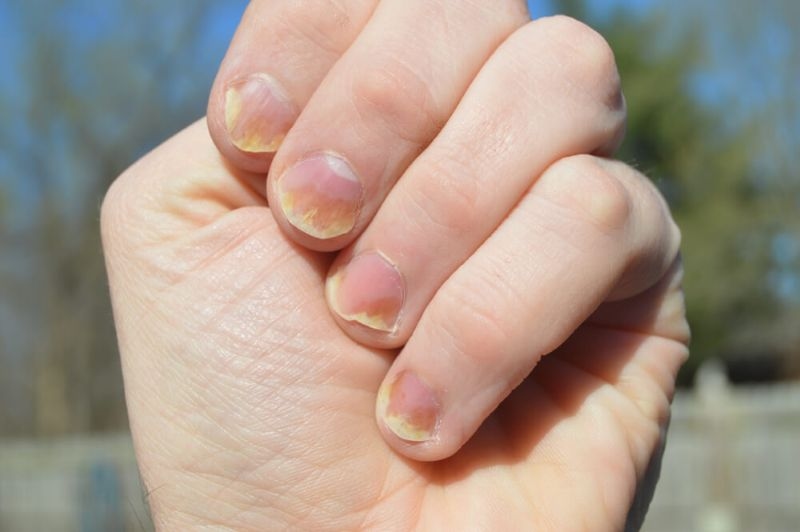
Dealing with nail psoriasis can be annoying when it starts to make you insecure. Many people with the condition find that daily tasks like typing, opening a can, or even washing their hands can suddenly become very uncomfortable. The condition often manifests as yellow-brown discoloration of the nail, thickening, pitting, crumbling, or separation from the nail bed. It is, however, usually the worry and stress that comes with having nails that look and perform poorly that is the second major difficulty of the disease.
But this question often arises: How to prevent nail psoriasis? And research from dermatology, due to be released in 2025, shows that 46% of people with psoriasis will experience nail psoriasis at some point in their lives, a figure that rises to 77% among those with moderate or severe psoriasis. The positive news? Looking after Nail Psoriasis doesn't necessarily involve complex routines; often, very simple daily habits combined with protective nail care and routine cleaning can reduce flare-ups and improve nail condition over time.
In this article, we look at simple ways you can use nail care tactics to reduce nail psoriasis symptoms and prevent them from getting worse, and simple methods to look after afflicted nails without adding extra stress to your life. Below are 7 nailcare tips for nail psoriasis:
One of the easiest ways to manage nail psoriasis is to keep nails short.
Long nails can split or separate, chip, and flake off from the nail bed, which is more common during a flare-up of nail psoriasis. Keeping nails short takes the pressure off the tender nail bed, significantly reducing the risk of trauma to the nail, which could worsen nail psoriasis. Also, it is a good idea to smooth down the nails rather than file or cut vigorously, as this can make the nail bed sore. Filing gently on a regular basis will help to keep nails smooth, preventing them from catching on surfaces during the day.
Dryness can intensify symptoms, so moisturizing is especially important in any nail care regimen. By applying rich creams or ointments to nails and cuticles daily, dry, cracked skin around your nails will become much softer and more comfortable. It's important to moisturize your hands as often as possible, especially after washing them.
This is because hands and nails can become dry after contact with soap and water, thereby increasing irritation of any sensitive nail psoriasis. According to a recent American Academy of Dermatology report on skin health, hydrated nails tend to be less prone to cracking and irritation. However, with proper hydration, cracked nails can be restored. It can also be effective to apply lotion at bedtime, then wear a light cotton glove.
While this can be tempting when fingernails or toenails start lifting and thickening, picking or scraping beneath affected nails will do more harm than good. Damage to the nail bed can provoke further inflammation and increase the risk of infection. Instead of resorting to scratchy or pointed objects, the best nail care experts suggest using soft brushes with warm water to clean beneath fingernails or toenails. Simply taking extra precautions and being as gentle as possible with the nail bed is a basic nail psoriasis prevention technique that can help prevent flare-ups.
There are many day-to-day activities that expose fingernails to water, chemicals, and friction without you really realizing it. Disinfecting solutions, dishwashing detergents, and even soapy water can irritate highly sensitive fingernails. Wearing rubber gloves with cotton linings for jobs such as dishwashing or cleaning with harsh chemicals helps reduce friction and exposure. They can dramatically reduce exposure of fingernails to irritants and thus help prevent flare-ups of nail psoriasis.
While they can be enjoyable, nail salons don't always make for ideal environments for people with nail psoriasis, as overly forceful cuticle removal, artificial nails, severe buffing, or even the removal of shellac may worsen current issues. If you go to a salon, consider these pointers:
Many dermatologists also recommend giving your nails a break from polish sometimes, so you can see how to Manage Nail Psoriasis and how they fare in their natural, unpolished state.
Psychological stress doesn't directly cause psoriasis, but it is clearly linked to flare-ups in a high percentage of people. In a 2025 psoriasis wellness study, it was revealed that emotional stress is one of the most widely reported causes of psoriatic flare-ups among patients suffering from the condition. It is therefore really important to do everything possible to reduce this form of stress. Small habits that make a difference include getting enough rest, regular exercise, practicing relaxation therapies such as meditation, stepping away from computers or phones periodically, and following a regular routine. Looking after your emotional well-being can play a crucial role in reducing the frequency of nail psoriasis flares.
Many patients stop taking their treatments before their nails have fully healed because improvement seems to take an incredibly long time. Nails do grow very slowly, though, with fingernails taking between four and six months for some noticeable improvement, while toenails may take as long as one year to heal completely. This is why continuing with prescribed treatments for an extended period is often very important for the overall long-term healing of the nails. Dermatologists will usually advise topical or oral medications, steroid treatments, or light therapy, depending on the severity of the condition; however, it's important to stick to a single treatment protocol so your body has a chance to recover without conflicting remedies.
Living with nail psoriasis can be challenging and, at times, frustrating. This skin condition can affect one’s sense of style and general confidence; however, this doesn't have to be the case for very long at all! It doesn't require complex routines; some basic daily steps can significantly reduce irritation and improve nail health. By following a consistent, healthy regimen of regular moisturizing, protecting your nails, and avoiding aggressive treatments and harmful chemicals during flare-ups, you will start to see a change. Always remember to maintain a consistent nail care regimen, as it may take a while to heal. Be patient with yourself during treatment.
Nail psoriasis is an immune-mediated disease, so there is no permanent cure. You can greatly improve your condition by following nail-care tips that can reduce nail psoriasis and sticking to the treatment plans your dermatologist recommends, but some people may experience flares of nail psoriasis after long periods of healthy nails.
No, nail psoriasis is not contagious. You can't catch it from anyone else or pass it on to others by sharing tools or any other means. This skin disease is not caused by a germ. However, it is best to take good care of your nails and maintain distance or take necessary precautions.
Diet cannot cure psoriasis, but people who adopt healthy diets and stay well hydrated often experience fewer inflammatory issues overall and therefore improved nail condition. Everyone is different, though, and trigger factors for the illness vary; not every dietary change will have a huge impact on everybody.
This content was created by AI